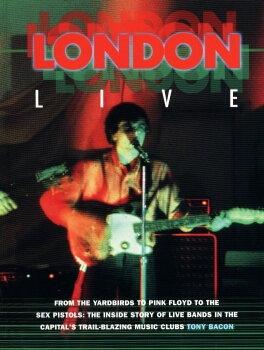
London Live paints that scene for you with a well researched, heavily entwined narrative that makes you realise the high levels
of musical activity and dense band bookings in operation in most popular venues. Street maps pick out those venues while ticket
stubs, newspaper ads, posters and a liberal smattering of photographs really bring the past back to the present. An excellent
touch is the inclusion of gig reviews as they appeared in magazines like 'Melody Maker' and 'Jazz Journal'. It's a bit like an
annotated 'Time Out'!
The sheer amount of work bands like Georgie Fame And The Blue Flames took on is impressive; "During just one month in the 1963 the band
played 43 bookings, including 13 at the Flamingo, eight at the All-Nighter, four at the Roaring 20's, three at The Scene, two at Klook's
Kleek and one at Eel Pie Island. 'The busiest band in town bar none', ...". For the 60's enthusiast, the pièce de résistance is an
appendix of venues that also lists every gig at the Marquee from 1962 to 1979. It's
amazing to see the day-by-day list of headlining acts that were on offer to the hip and swinging clubbers.

 I first heard of John around 1962/3. I was working with " The Man with the Golden Trumpet " - Eddie Calvert at the time. I, like
many guitarists, was involved mainly in Rock, C&W, and various other styles of music. But this name McLaughlin kept popping up.
"Have you heard McLoughlan[sic], have you heard McLoughlan[sic]", was the cry. And, the voices were filled with genuine excitement and
admiration for this as yet unknown guitarist. Of course I had never heard of him. Most people hadn't. So I forgot about the name
until it started popping again up in London. The first time I met him was on a gig at a U.S Army base with Johnny Duncan and the
Blue Grass Boys, sometimes affectionately known as "Johnny Duncan and His Blue Assed Flies." Anyway, we didn't have a double bass
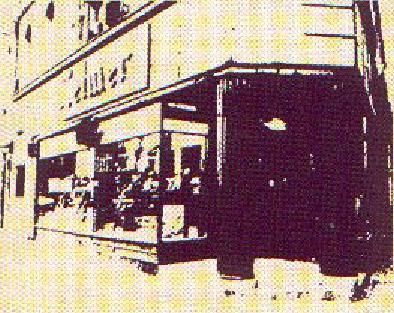
player for the gig and at the last moment we picked up this guy who was working as a salesman at "Selmers" music store in Charing
Cross Road. "Hi, I'm Joe Moretti", I said. "Hi, I'm John Mclaughlin", he replied. And that's how we met. John borrowed a bass from
the music store for the gig and off we went. John wasn't a steam bass player by any means, but he needed the money which was about
seven pounds. The great drummer Johnny Butts was with us too. I didn't connect the name McLaughlan with the guitarist I'd been
hearing so much about, and he gave no indication that he played guitar, so after the gig I forgot about the guy. On Saturday mornings
all the guitarists would flock to the music stores to try out new guitars, talk shit, and invariably show off what they could do.
Then word started getting around that a certain guitar salesman at "Selmers" was blowing everybody away. Guys would go in there full
of themselves and leave totally destroyed by what this Gentleman was laying down. But he sure sold a lot of guitars for the store.
I first heard of John around 1962/3. I was working with " The Man with the Golden Trumpet " - Eddie Calvert at the time. I, like
many guitarists, was involved mainly in Rock, C&W, and various other styles of music. But this name McLaughlin kept popping up.
"Have you heard McLoughlan[sic], have you heard McLoughlan[sic]", was the cry. And, the voices were filled with genuine excitement and
admiration for this as yet unknown guitarist. Of course I had never heard of him. Most people hadn't. So I forgot about the name
until it started popping again up in London. The first time I met him was on a gig at a U.S Army base with Johnny Duncan and the
Blue Grass Boys, sometimes affectionately known as "Johnny Duncan and His Blue Assed Flies." Anyway, we didn't have a double bass
player for the gig and at the last moment we picked up this guy who was working as a salesman at "Selmers" music store in Charing
Cross Road. "Hi, I'm Joe Moretti", I said. "Hi, I'm John Mclaughlin", he replied. And that's how we met. John borrowed a bass from
the music store for the gig and off we went. John wasn't a steam bass player by any means, but he needed the money which was about
seven pounds. The great drummer Johnny Butts was with us too. I didn't connect the name McLaughlan with the guitarist I'd been
hearing so much about, and he gave no indication that he played guitar, so after the gig I forgot about the guy. On Saturday mornings
all the guitarists would flock to the music stores to try out new guitars, talk shit, and invariably show off what they could do.
Then word started getting around that a certain guitar salesman at "Selmers" was blowing everybody away. Guys would go in there full
of themselves and leave totally destroyed by what this Gentleman was laying down. But he sure sold a lot of guitars for the store.