 In the mid 1970's many believed John McLaughlin committed commercial suicide by abandoning electric instruments and
Western sensibilities in favor of an all acoustic group featuring Indian musicians. In fact, record sales with this
group, Shakti, were quite disappointing. Sometimes though, a musician has to travel where his muse may lead. In this
case, McLaughlin's muse led him to a very fertile groundbreaking. Shakti, with all due respect to the very fine group
Oregon, was really the first band to truly capture the essence of what we now call "World Music". Shakti's dependence
on Eastern musical models infused with western jazz-like improvisation made for an exciting and influential stew.
John's friend, Jeff Beck, has stated that the Shakti albums contained some of the best guitar playing ever put on a
record.
In the mid 1970's many believed John McLaughlin committed commercial suicide by abandoning electric instruments and
Western sensibilities in favor of an all acoustic group featuring Indian musicians. In fact, record sales with this
group, Shakti, were quite disappointing. Sometimes though, a musician has to travel where his muse may lead. In this
case, McLaughlin's muse led him to a very fertile groundbreaking. Shakti, with all due respect to the very fine group
Oregon, was really the first band to truly capture the essence of what we now call "World Music". Shakti's dependence
on Eastern musical models infused with western jazz-like improvisation made for an exciting and influential stew.
John's friend, Jeff Beck, has stated that the Shakti albums contained some of the best guitar playing ever put on a
record.
 One doesn't have to look very far into McLaughlin's past to see why such a band as Shakti would have been of interest
to him. His own inclinations toward Eastern music can be heard on side two of his beautiful recording My Goal's Beyond.
Certainly, McLaughlin was influenced even before that outing by the pop mysticism of the times and his own involvement
in seeking self-realization through Eastern philosophies. (Not to mention Indian music lessons).
One doesn't have to look very far into McLaughlin's past to see why such a band as Shakti would have been of interest
to him. His own inclinations toward Eastern music can be heard on side two of his beautiful recording My Goal's Beyond.
Certainly, McLaughlin was influenced even before that outing by the pop mysticism of the times and his own involvement
in seeking self-realization through Eastern philosophies. (Not to mention Indian music lessons).
How ironic that 20 years later, a band different from Shakti but born from its spirit, should emerge to commercial success.
And how ironic that McLaughlin has "electricized" it!
 Remember Shakti is the name of the group and the name of the live album. A 2 CD set recorded over four nights in England in
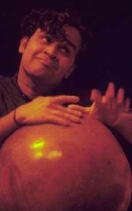
the fall of 1997 features the two founding fathers of the original Shakti, McLaughlin and the tabla master Zakir Hussain.
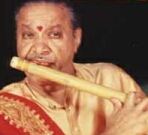
One of India's most respected musicians, flautist Hariprasad Chaurasia is an integral voice and most enjoyably, Shakti's
original ghatam player "Vikku" Vinayakram helps to serve the rhythm.
Remember Shakti is the name of the group and the name of the live album. A 2 CD set recorded over four nights in England in
the fall of 1997 features the two founding fathers of the original Shakti, McLaughlin and the tabla master Zakir Hussain.
One of India's most respected musicians, flautist Hariprasad Chaurasia is an integral voice and most enjoyably, Shakti's
original ghatam player "Vikku" Vinayakram helps to serve the rhythm.
McLaughlin plays electric guitar for these outings which were held in honor of India's and Pakistan's 50th anniversaries.
(Too bad music doesn't seem to be quite enough to keep the peace). The electric guitar and flute give Remember Shakti a very
different sound than the acoustic guitar and violin of the great L. Shankar had given Shakti.
 The tunes tend to be very long and require careful listening. Two McLaughlin standards, Lotus Feet and Zakir, are present.
McLaughlin's beautiful and uplifting tune The Wish, which appeared on The Promise, is also given the treatment. Chaurasia is
featured , minus McLaughlin, on the opening self-penned tune Chandrakauns and he also wrote Mukti which features he and
McLaughlin trading.
The tunes tend to be very long and require careful listening. Two McLaughlin standards, Lotus Feet and Zakir, are present.
McLaughlin's beautiful and uplifting tune The Wish, which appeared on The Promise, is also given the treatment. Chaurasia is
featured , minus McLaughlin, on the opening self-penned tune Chandrakauns and he also wrote Mukti which features he and
McLaughlin trading.
Remember Shakti is reflective, serious East meets West music. It is not without some hilarity however, as Vikku's laughter
is quite contagious. It is also not without some truly virtuoso moments and plenty of drama. The deep tones of the electric guitar and the
Bansuri flute float above the percussive groundwork. A bass-like drone provides the sub-surface support. Remember Shakti is well
worth your valuable listening time.
 (Note: It is absolutely imperative you obtain Zakir Hussain's Making Music. It features Hussain, McLaughlin, Chaurasia and
Jan Garbarek in a simply dizzying display of East meets West acoustic artistry).
(Note: It is absolutely imperative you obtain Zakir Hussain's Making Music. It features Hussain, McLaughlin, Chaurasia and
Jan Garbarek in a simply dizzying display of East meets West acoustic artistry).
Walter Kolosky
Walter Kolosky is a former jazz disc-jockey and newspaper reporter who is now a full-time business man and part-time jazz critic. He has been writing about the music of John McLaughlin for 25 years. Walter has written on-line reviews of all of John's recordings. He lives with his wife Hatty and daughter Anna in Natick, MA, USA.
smsi@attbi.com
