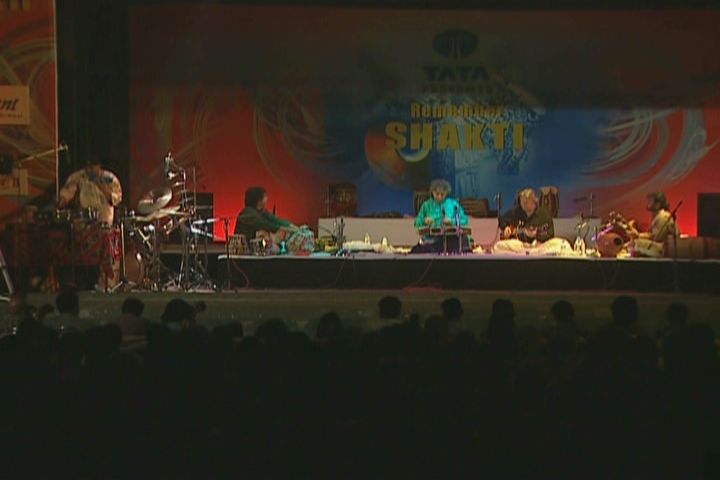
Someone who was lucky enough to be a member of the audience in Bombay noted that "BOTH shows were recorded on digital
video format using three cameras (stage left and right and one center from the soundboard). I spoke to the photographer,
who mentioned that it was being done for Universal (who I believe owns Verve, right?) so who knows if there is a chance
of its video release ... Bottomline, the band knew it was a rare event in history and so they have preserved it all ways
they could."
Thank goodness for their foresight
The DVD is 56 minutes and 11 seconds in duration and comprises 4 chapters in BUP format with various additional IFO and VAB
control files, in all over 2Gbs. This means that this DVD movie is actually a DVD movie, unlike the Limited Edition The
Believer movie, which was simply an MPEG stored on a CDROM and could be viewed with MPEG-reading software. This also means
that you will need DVD-reading hardware (i.e., a DVD drive) to be able to watch the concert footage. This and the
unavoidable subject of price versus package contents (discussed on the main page about the Box Set) are the only down sides.

As soon as you're installed in front of the screen the magic begins, and oh what magic! It is a beautifully produced
DVD, opening with a title sequence that soon offers the option to go directly on to the start of the concert footage or choose
from the three titles on offer to avoid repeat of an introductory montage of India at subsequent viewings. The montage pans
through the red sandstone northern gateway of the Taj Mahal and along the ornimental gardens then fades to the Chandellan sculptures
of Khajuraho before flying south past the Dravidian shore temples of Mahabalipuram and heads north again to follow the course
of Mother Ganga past the bathing ghats at Benares. Now the players are introduced, illustrated by concert photographs taken by Ina
McLaughlin, and the DVD contents scroll onto the screen. The concert begins and we recline back into our luxury stage front cushions
ready to enjoy a piece of history in the making.
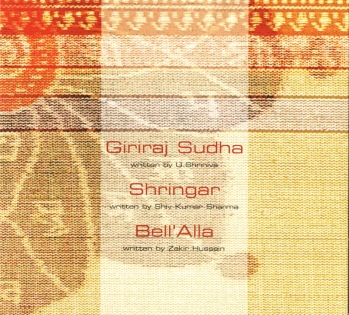
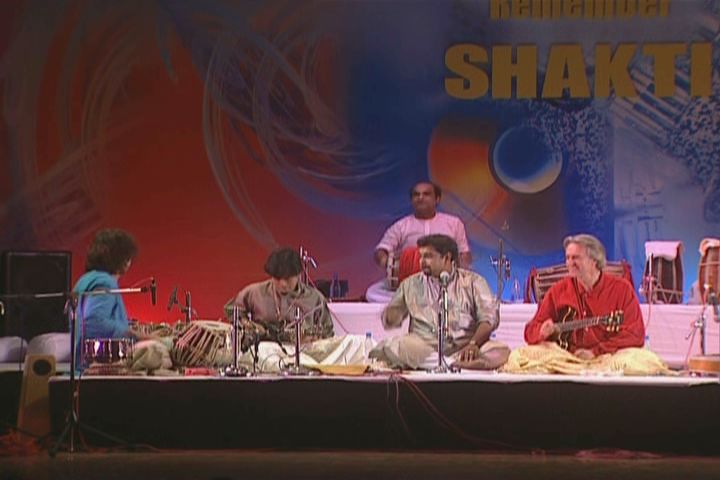
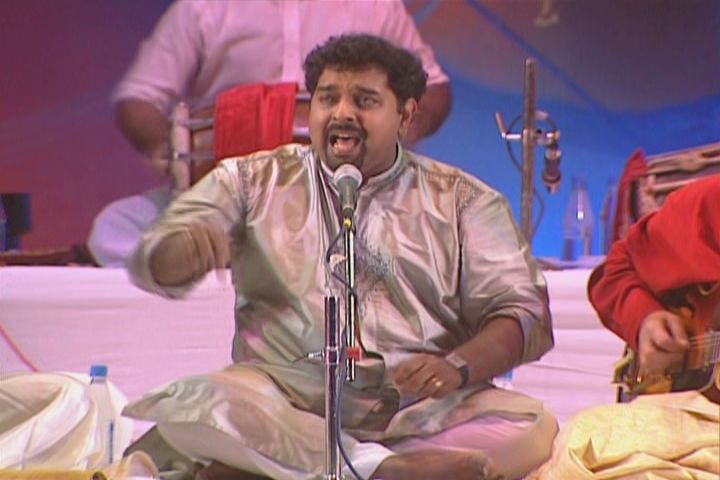
Everyone is having so much fun trading phrases with vocalist Shankar Mahadevan during the opening piece, Giriraj Sudha,
that it is intoxicatingly contagious, and soon your laughing and clapping along with the rest of them. The skilful deception that
you are actually there is held throughout the length of the movie by the saturation of camera angles and prudent use of
close-ups. During the edit, soloists are zoomed in on at the right moment and distance is minimised to allow close inspection of
playing technique.
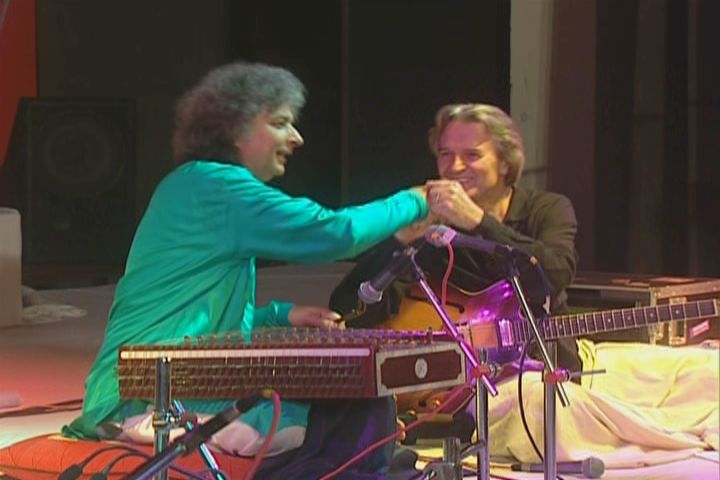
On the subject of technique, the Santur playing of Shiv Kumar Sharma during his composition, the second piece Shringar
is incredible; to realise how he conjoured those floating feathery whispers heard on the Saturday Night In Bombay album, (it
is also incredible that his name is omitted from the credits on the cover shared by the DVD and the bonus track, which is most misleading,
listing Vikku Vinayakram and several others who sadly do not make an appearance on film but who can be heard on Niyati).
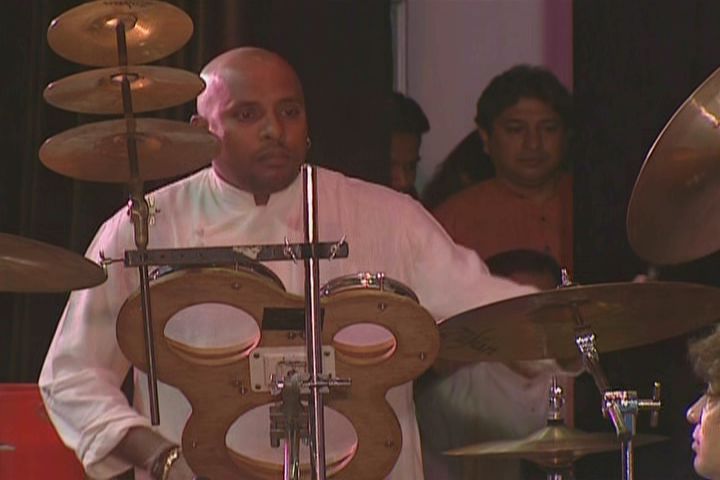
Less of an apparent technique is that of Sivamani who does contribute an appropriately harder edge during the last piece, Bell'Alla,
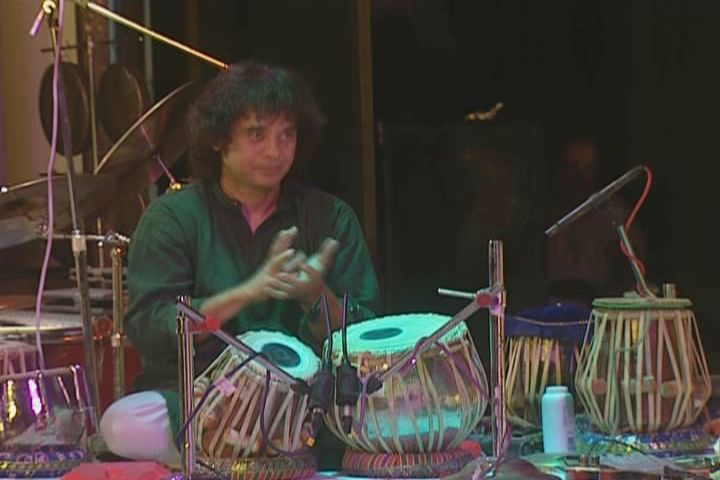
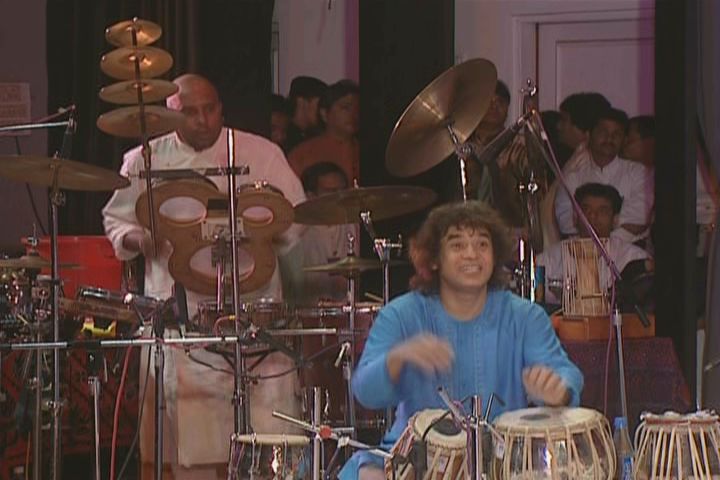
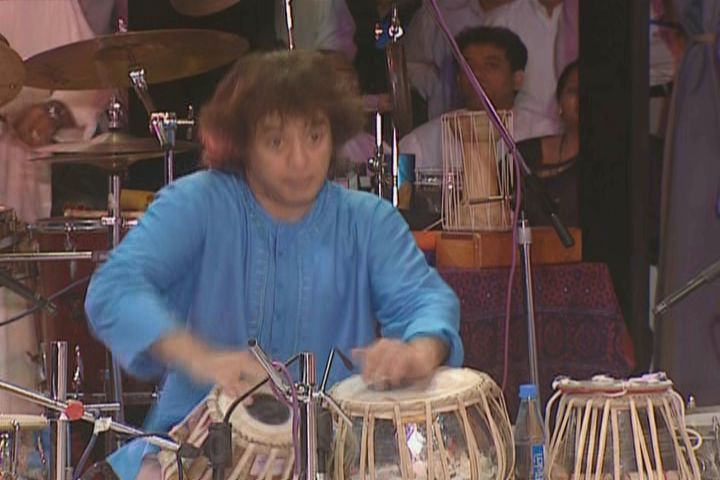
and the bonus track Niyati, but receives several glances of incomprehension from his colleagues when he introduces percussion at less than obvious times. Tabla
maestro Zakir Hussain seated with the others on a low platform repeatedly looks over his shoulder helping to pull the standing Sivamani into
the collective from his peripheral position, working closely with him and breaking down the barrier between the more traditional rhythm
section and this western-style drum kit.
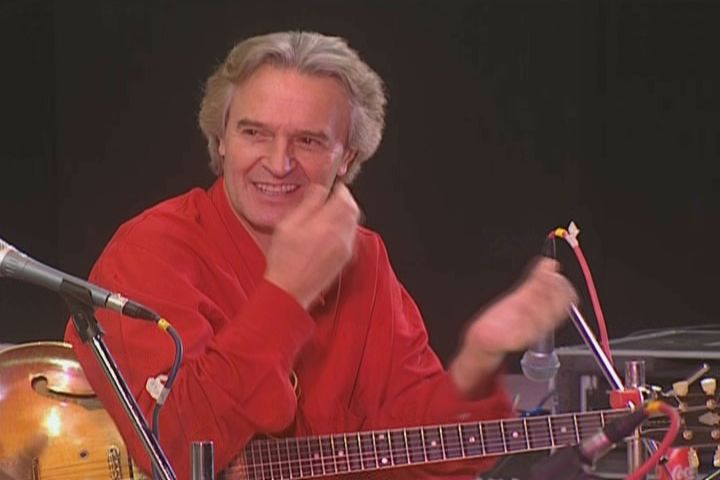
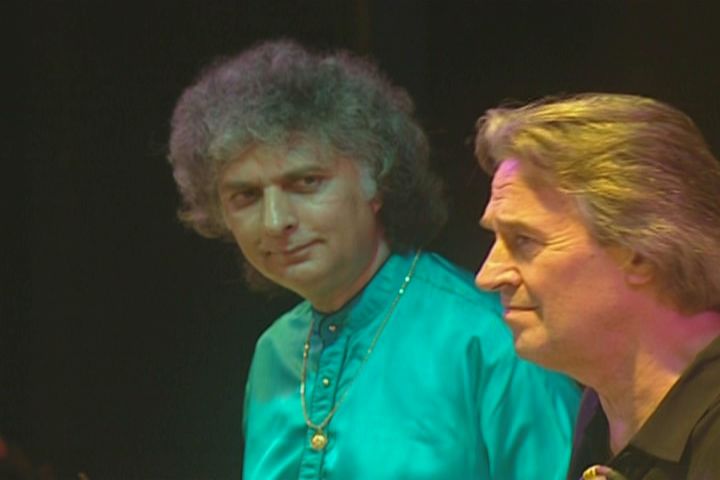
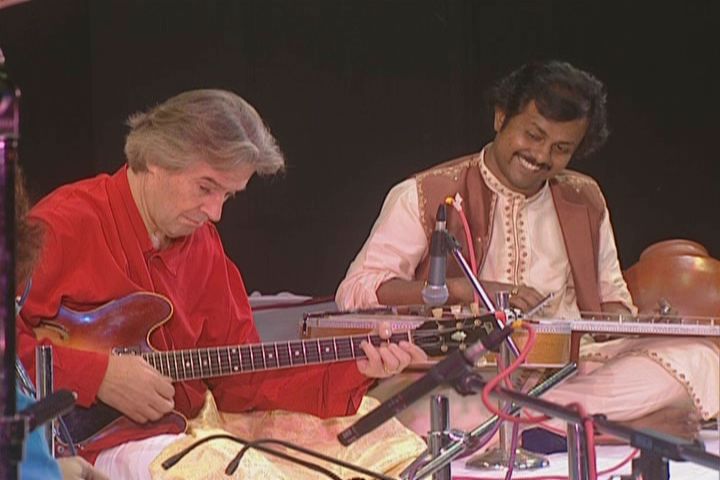
John McLaughlin is clearly enjoying himself immensely. Always beaming toothy grins towards any other player engaging with him and
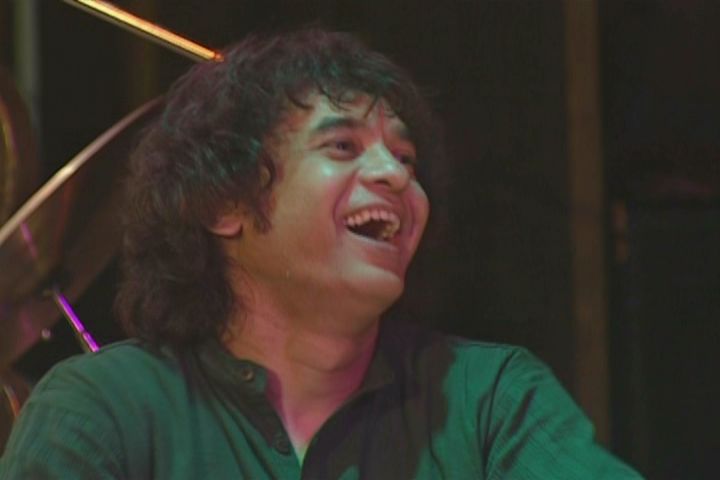
ready to receive. Zakir Hussain reciprocates throwing his head back with joy. JM shares the laughter with Shankar Mahadevan,
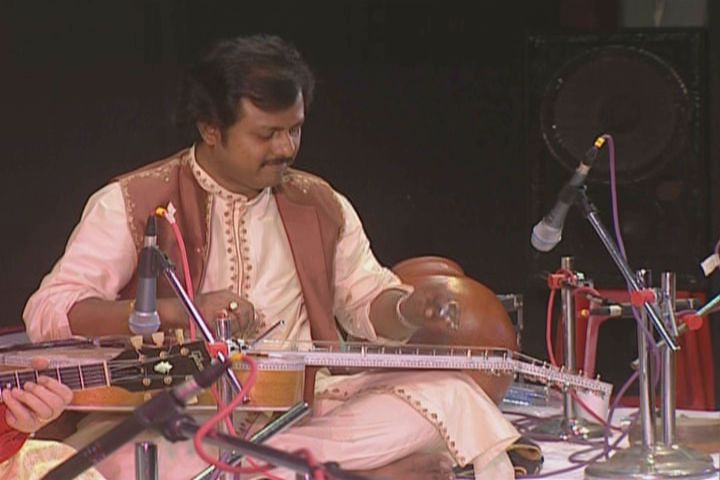
kisses the hand of Shiv Kumar Sharma and shows mutual appreciation for fellow guitarist Debashish Bhattacharya. Looks, glances,
smiles and laughter are the currency for the subtle interplay between all of these wonderful musicians, and it is only possible to fully
appreciate that communication when seen for yourself.
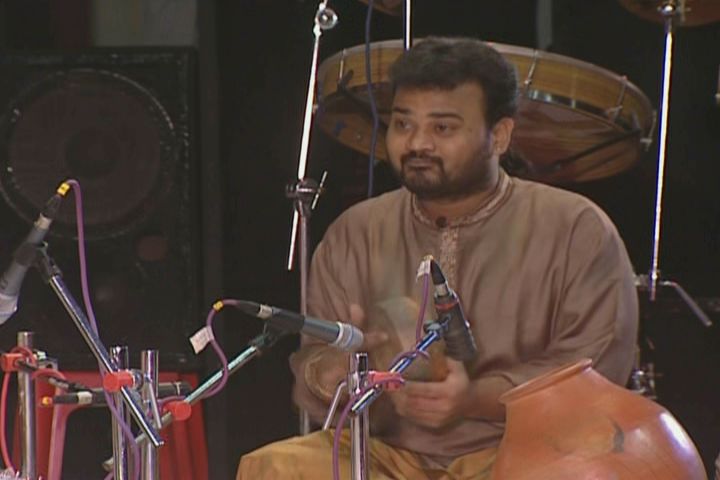
A phenomenom occurs during Bella'Alla when we are treated to one of Selvaganesh's astonishing Kanjira solos, a pounding
blur that seems to defy rhythmical possiblities from the hands of one man. Add to this the pleasure of seeing The Master, Zakir Hussain,
also soloing and ask yourself "How much would I pay for a ticket to see this show only once?". Have the DVD and you can watch it as many
times as you want.